Mokotów Clinic:
al. Niepodległości 92/98
City Centre Clinic:
ul. Świętokrzyska 30
01 — What we help with · Face and eyes

Active acne

Acne carries on well beyond the teenage years — and you can face it with us alongside you. We combine laser, light and peels to calm inflammation, reduce blackheads and lower the likelihood of relapse. At your consultation we will discuss how long it has lasted and what has already been used — and build a realistic, staged plan matched to your skin.

Laser · light · peelscombination therapy
Inflammation and relapseswe work on the cause
2 clinicsCity Centre · Mokotów
Consultationwith a skin analysis
02 — What it is

Active acne — why skincare alone usually needs support

Acne is a chronic inflammatory disease of the hair follicles and sebaceous glands. Four mechanisms make it up: excess sebum production, excessive keratinisation of the follicular openings, proliferation of C. acnes bacteria and inflammation. The result is blackheads, papules, pustules and, in more severe forms, nodules and cysts. Active acne reaches far beyond teenagers — adult skin, particularly in women, struggles with it increasingly often.

That is why effective treatment rarely rests on a single cosmetic product. At Velvet Skin Clinic we combine treatments that act on different links in this process — laser and light reduce bacteria and inflammation, while peels normalise keratinisation and unblock the follicular openings. We always match the plan to the form and severity of the acne, and in more severe cases we work together with a dermatologist.

See the details

Why acting early pays off

The longer inflammation persists, the greater the risk that acne will leave scars and pigmentation behind. Early, consistent therapy improves comfort and appearance “here and now” and genuinely lowers the risk of permanent marks. If scars have already formed, we work on them separately (see the concern scars and skin texture), and we lighten post-inflammatory pigmentation as part of complexion therapy.

03 — Velvet Skin Clinic in numbers

Experience you can rely on

4 233treatments for acne and problem skin
8 173clients have trusted Velvet Skin Clinic
75% of clients return for further treatments
2clinics in central Warsaw

We manage acne in stages, combining laser therapy, light and peels — with the emphasis on calming inflammation and limiting relapses.

Source: Versum and Booksy reports, as at 30.06.2026 (total treatments performed for acne and problem skin; client numbers and return rates — data for the whole clinic).

04 — Causes

Where acne comes from

Sebum and keratinisation

Excess sebum production and excessive keratinisation block the follicular openings, creating blackheads — the starting point for inflammatory lesions.

Bacteria and inflammation

In a blocked follicle C. acnes bacteria multiply, which triggers inflammation — papules, pustules and nodules appear.

Hormones and aggravating factors

Hormonal fluctuations, stress, a high-glycaemic-index diet and unsuitable skincare can aggravate the lesions.

05 — Recognition

Recognise the form of acne

Comedonal

Open and closed comedones dominate, with a “rough” skin surface. Exfoliation and unblocking the openings are key — peels and microneedling help.

Papulopustular

Red papules and pustules with inflammation. Here laser and light that reduce bacteria and inflammation help particularly well.

Conglobate / nodular

Deep, painful nodules and cysts with a risk of scarring. This form calls for dermatological management — treatments play a supporting role.

We assess the form and severity of the acne at your consultation. In more severe cases we refer you to a dermatologist and work alongside them.

06 — Consultation

Acne returning despite your best efforts? Book a consultation — we will assess your skin and build a realistic treatment plan.

Book a consultation
07 — How we help

Recommended solutions for active acne

We treat acne on several fronts — combining methods that act on different links in the disease. Below are the treatments we match to the form of acne; each has its own dedicated page.

Laser

Laser acne treatment

The Nd:YAG laser reduces sebaceous gland activity and calms inflammation — helping to reduce inflammatory lesions and “settle” acne-prone skin.

IPL light

Dye-VL Alma

IPL technology acts on the bacteria and redness that accompany acne, evening out the complexion along the way and improving its overall look.

Peels

Medical chemical peels

Acids (salicylic and azelaic among others) normalise keratinisation, unblock the follicular openings and reduce blackheads — the foundation of therapy for acne-prone skin.

Microneedling

Dermapen 4

Microneedling supports skin regeneration and work on post-acne marks. We use it judiciously, outside phases of strong flare-up.

08 — Which method is for me

A quick comparison

MethodWorks best onResultCourse
Nd:YAG laserinflammatory lesions, papules and pustulescalming of inflammationa course of treatments
Dye-VL (IPL)acne with redness, complexionreduction of bacteria and rednessa course
Peelsblackheads, oily skin, seborrhoeaunblocking of the openings, normalisationa course of 3–8 treatments
Dermapen 4post-acne marks and textureregeneration, evening of the skina course, outside flare-ups
09 — Why it works

What the research says about acne treatments

We select methods on the basis of clinical data. Below are publications on laser therapy, peels and microneedling in the treatment of acne and the marks it leaves.

Nd:YAG laser
Active acne

The 1064 nm laser in active acne

The study evaluated micropulsed 1064 nm Nd:YAG laser technology in the treatment of active acne, documenting an improvement in the condition of the skin.

Artzi et al., J Cosmet Dermatol 2021 · PubMed →
Salicylic acid peel
Acne

Salicylic acid peel in acne

A randomised split-face study compared a salicylic acid peel with Jessner’s solution in patients with acne and post-inflammatory pigmentation.

How et al., Int J Dermatol 2020 · PubMed →
Microneedling
Marks

Microneedling and acne scarring

The paper assessed the effectiveness of microneedling in the treatment of scars and in improving skin texture after acne.

Li et al., Arch Dermatol Res 2024 · PubMed →

Informational and educational material — it does not replace a medical consultation. The studies cited concern the methods as a group; in severe acne dermatological treatment may be necessary. Results are individual.

10 — How it works in practice

Acne therapy step by step

We begin by assessing the form and severity of the acne and by taking a history — including any treatment used so far. On that basis we build a staged plan, often combining several methods in one course. Patience and regularity matter here as much as the treatment itself.

Your consultation and assessment

Identifying the form of acne, taking a history and a referral to a dermatologist where needed.

Treatment plan

The choice and order of treatments — laser, light, peels — matched to your skin.

A course of treatments

Calming inflammation and normalising the skin over successive sessions.

Stabilisation and skincare

A maintenance plan and home skincare to reduce the likelihood of relapse.

11 — Care and prevention

How to care for acne-prone skin and limit relapses

The results of treatments last longer when supported by the right daily skincare. Acne-prone skin needs consistency rather than aggression.

Gentle cleansing

Cleanse your face gently, twice a day. Aggressive scrubbing intensifies inflammation and irritation.

Leave the breakouts alone

Squeezing pustules is the shortest route to pigmentation and scarring. Let your skin heal calmly.

Non-comedogenic skincare

Choose products labelled non-comedogenic and suited to oily and acne-prone skin.

Sun protection

A light SPF lowers the risk of post-inflammatory pigmentation — particularly after laser and peels.

Sticking to the course

Keep to the agreed treatment schedule — an interrupted course more easily ends in relapse.

Informational and educational material. Detailed recommendations are given by your specialist; results are individual.

12 — Related concerns and therapies

See also

Concern

Scars and skin texture

Post-acne marks and scars — fractional laser and microneedling.

See
Concern

Pigmentation and complexion

Brown post-acne marks (PIH) — brightening therapy.

See
Concern

Thread veins and redness

When acne is accompanied by redness and reactive skin.

See
13 — Patient reviews

They trusted us

★★★★★

“I recommend it, the treatments helped me in my battle with acne.” (translated from Polish)

Martyna W. · 2025review from Google
★★★★★

“I spent a long time looking for somewhere that would take my acne-prone skin seriously, and I finally found it. The treatment plan was put together properly, with no upselling, and after a few visits the results are genuinely visible.” (translated from Polish)

Barbara M. · 2025review from Google
★★★★★

“The BHA acid treatment was my first experience of this kind of skincare and I am delighted. My skin looks healthier, it is less oily, and inflammation heals more quickly.” (translated from Polish)

Gertruda O. · 2026review from Google
14 — Safety

When a dermatologist is needed

Aesthetic treatments support acne therapy very well, though they do not replace dermatological care. The main situations calling for caution or a doctor’s consultation:

severe conglobate/nodular acne — dermatological treatment
isotretinoin therapy (wait as advised)
pregnancy and breastfeeding (some methods)
active infection or cold sores
a fresh tan
suspected hormonal cause — diagnostic work-up

In more severe cases we work alongside a dermatologist — the safety and effectiveness of treatment matter more to us than any single procedure.

15 — Questions and answers

Frequently asked questions about acne treatment

Which treatments help with active acne?

The best results come from combination therapy: laser and light reduce bacteria and inflammation, while peels normalise keratinisation and unblock the follicular openings. We match the plan to the form of acne; in severe cases we combine treatments with dermatological care.

Will treatments cure acne for good?

Treatments effectively calm the lesions and improve the appearance of the skin, though acne can be chronic and recurring. That is why after therapy we recommend a maintenance plan and suitable skincare, which help to sustain the result.

How many treatments will I need?

We treat acne as a course — usually several sessions at intervals set by your specialist. The number depends on the form and severity of the lesions and on how your skin responds. We present the exact plan after your consultation.

Will the treatments leave marks?

Reducing the risk of permanent marks is precisely the aim of the therapy. If scars or pigmentation have already formed, we work on them separately — with fractional laser, microneedling and brightening therapy.

Can treatments be combined with dermatological care?

Yes — this is often the best solution. Aesthetic treatments support dermatological care, and during therapy with strong medication (isotretinoin, for example) we adjust the plan and postpone some treatments accordingly.

How much does it cost?

The price depends on the methods chosen and the number of treatments in the course. We provide a quote at your consultation, and full rates are available in the price list. The consultation includes a skin analysis.

16 — Who performs the treatments

Treatments are performed by our cosmetologists

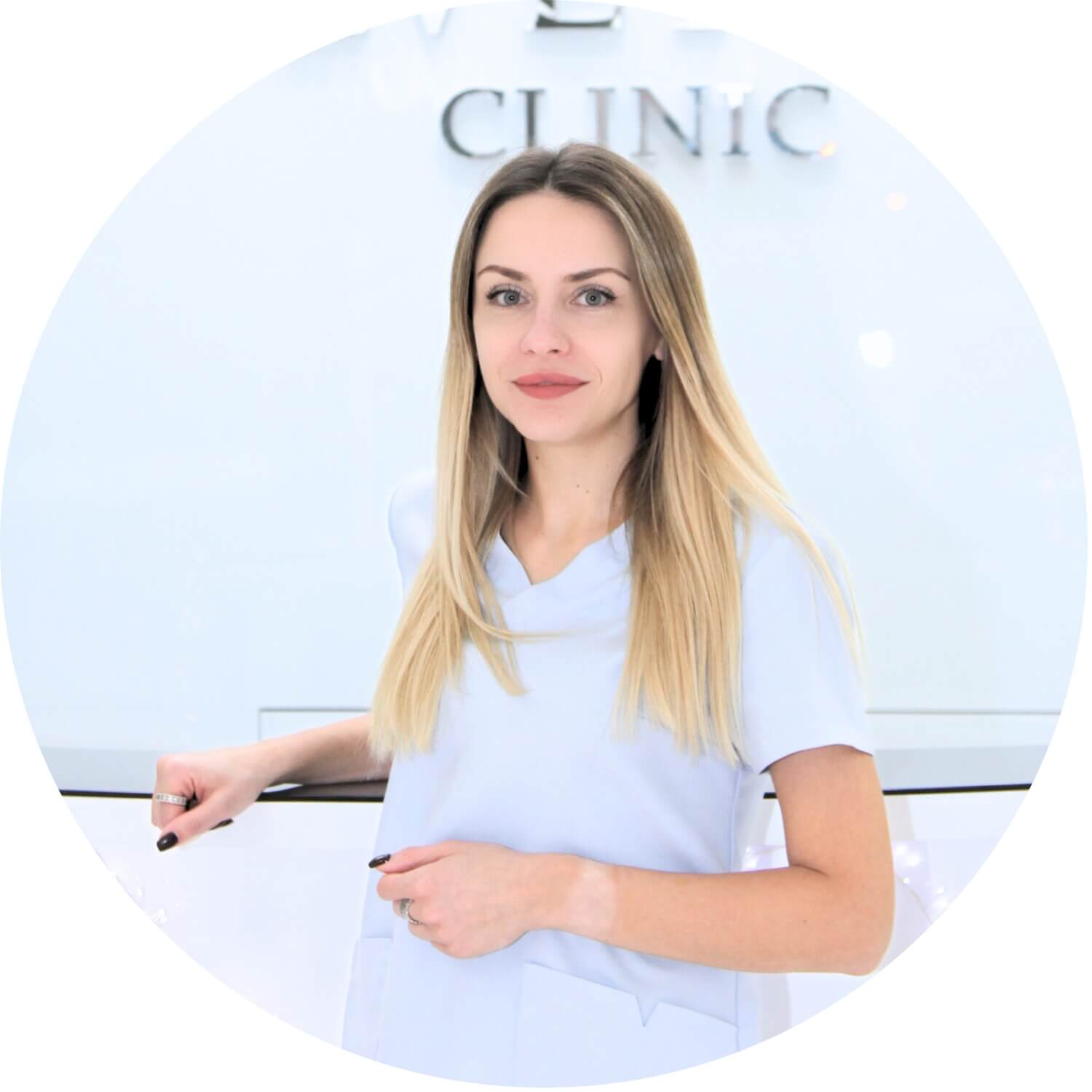
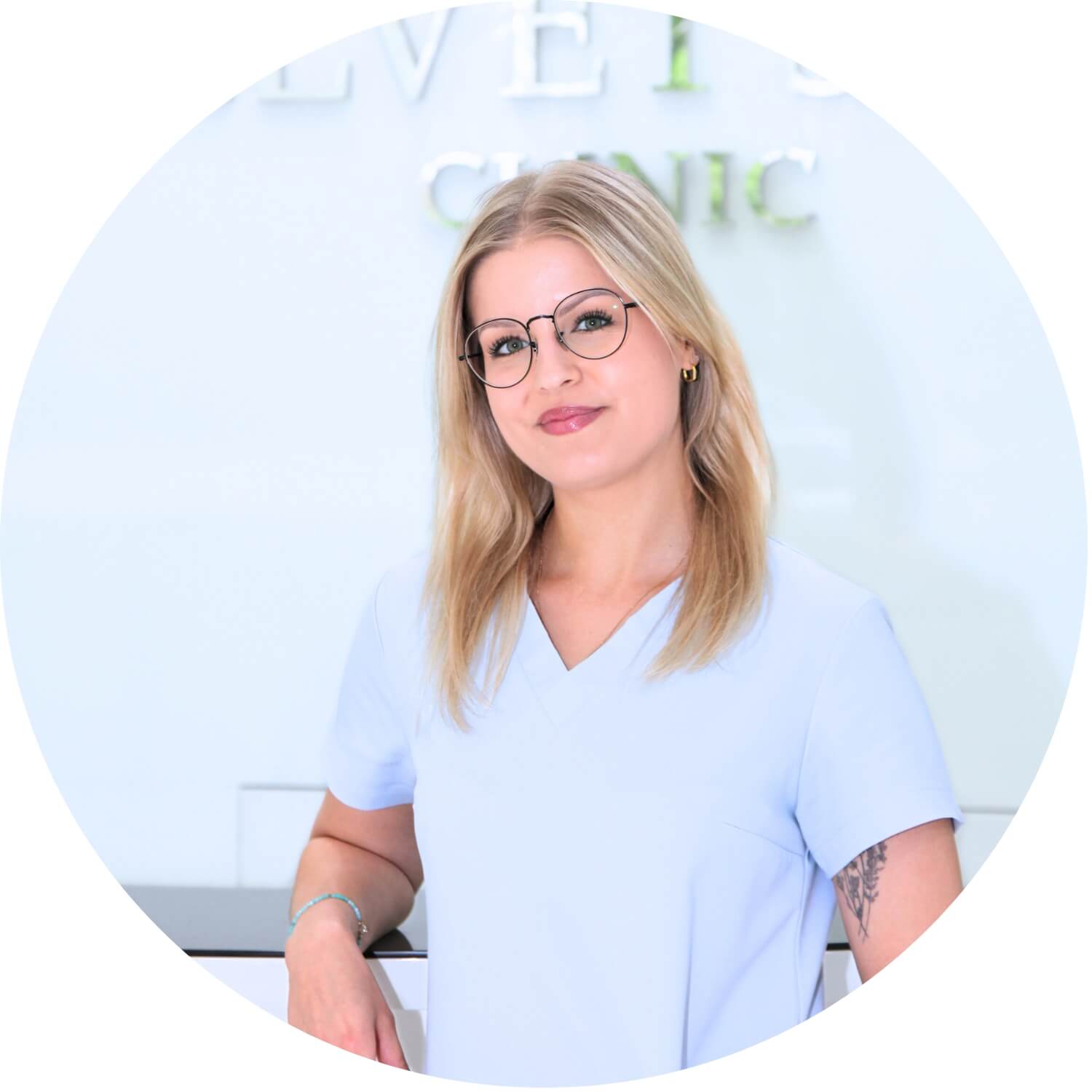
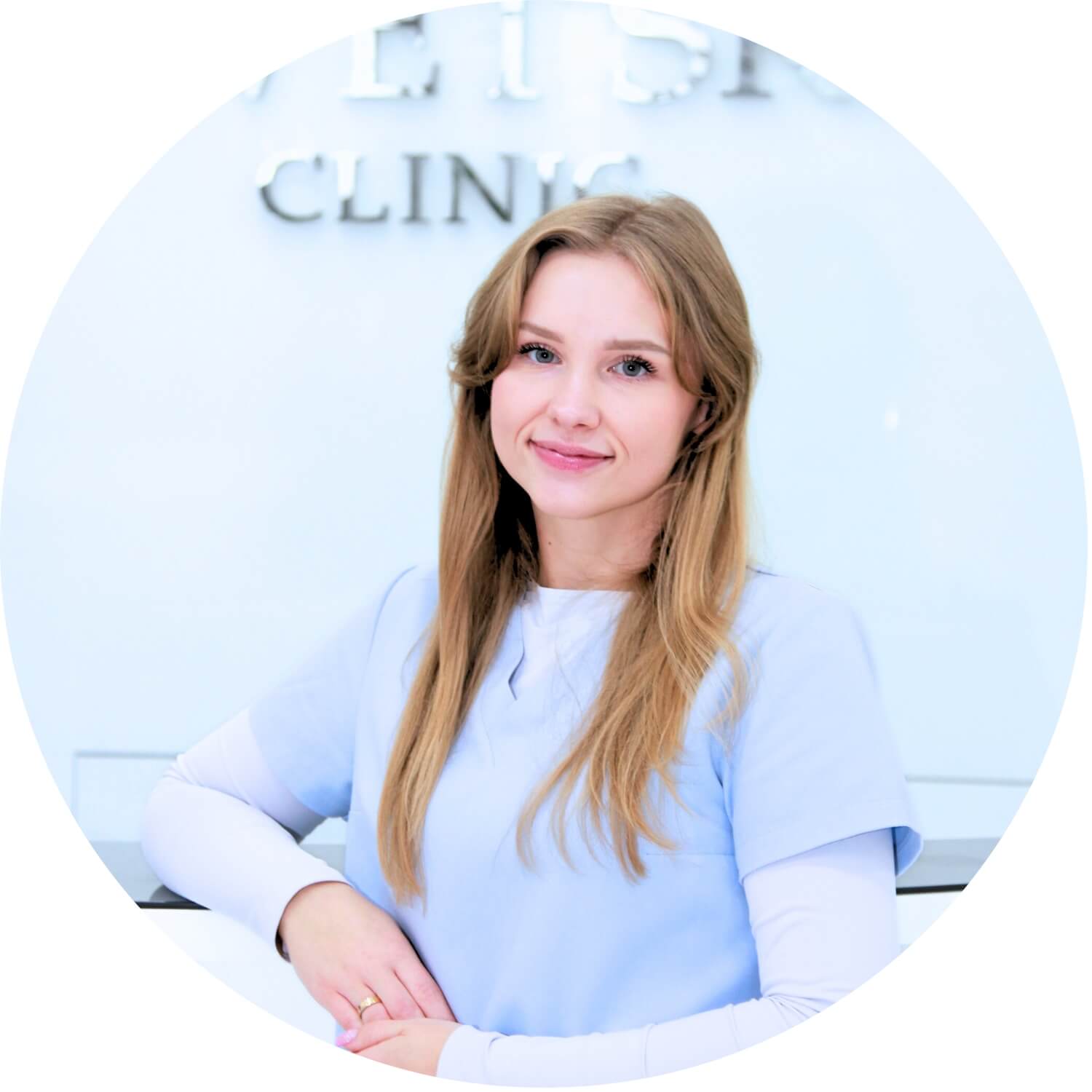
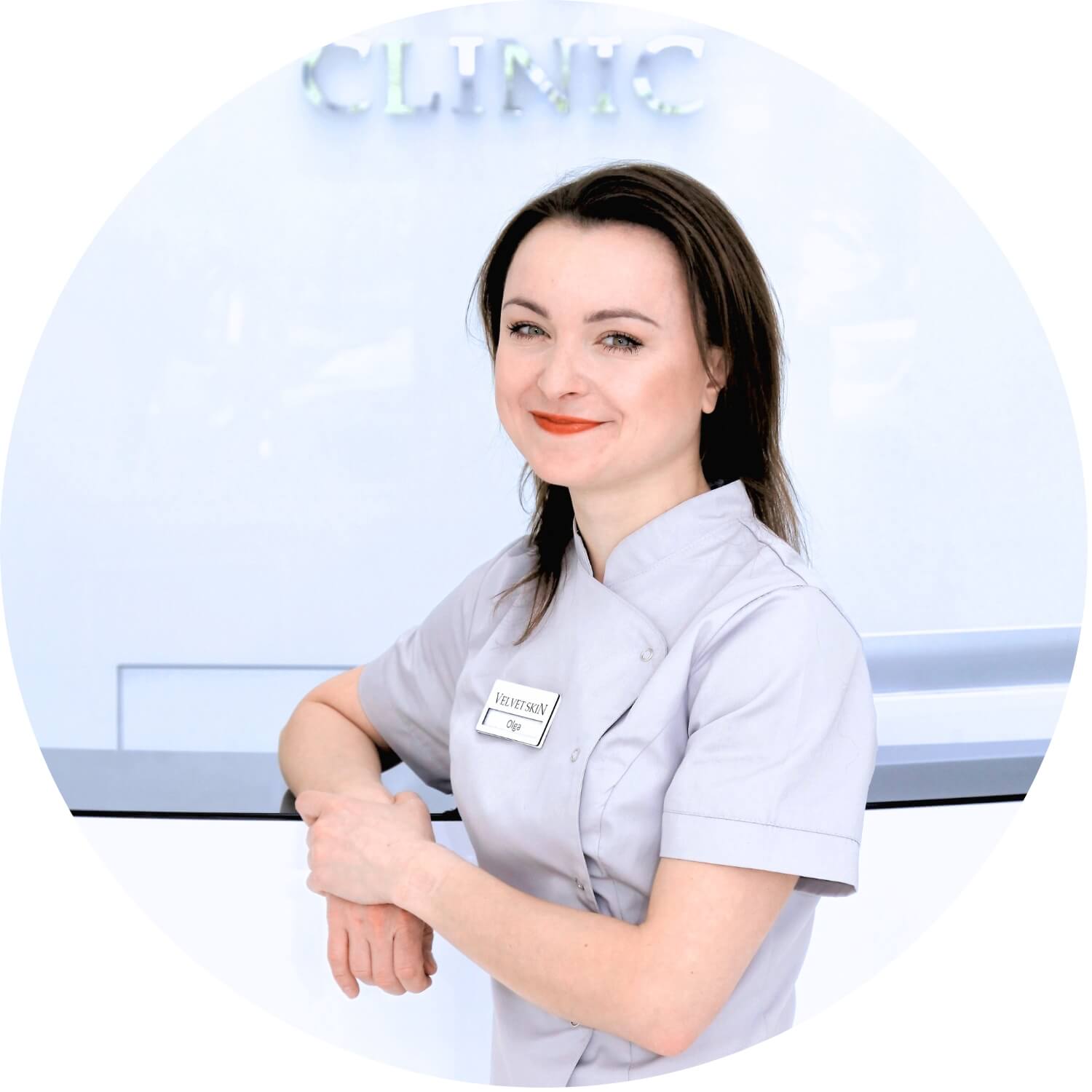
Treatments at Velvet Skin Clinic are performed by certified cosmetologists with many years of experience in laser therapy, hi-tech devices and skin care treatments. After a consultation we match the method and the specialist to your skin and your goal.

Małgorzata Wołyńska — MSc cosmetologist, Velvet Skin Clinic
Małgorzata WołyńskaMSc cosmetologistLaser therapy, laser hair removal, body contouring, anti-ageing
Edyta Osowska — MSc cosmetologist, Velvet Skin Clinic
Edyta OsowskaMSc cosmetologistInjectable treatments, anti-ageing therapies
Wiktoria Gregorczyk — certified cosmetologist, Velvet Skin Clinic
Wiktoria Gregorczykcertified cosmetologistLaser therapy, body contouring, laser hair removal
Julia Kononowicz — certified cosmetologist, Velvet Skin Clinic
Julia Kononowiczcertified cosmetologistLaser therapy, injectable treatments — over 10 years of experience
Kamila Rybak — MSc cosmetologist, Velvet Skin Clinic
Kamila RybakMSc cosmetologistHi-tech technologies, body contouring
Paulina Maruszewska — MSc cosmetologist, Velvet Skin Clinic
Paulina MaruszewskaMSc cosmetologistHi-tech procedures for face and body, body contouring
Olga Kucińska — MSc cosmetologist, Velvet Skin Clinic
Olga KucińskaMSc cosmetologistLasers, HIFU, needle mesotherapy, trichology — with the clinic since 2011
Joanna Kondratczyk — MSc cosmetologist, trichologist, Velvet Skin Clinic
Joanna KondratczykMSc cosmetologist, trichologistLaser hair removal, laser therapy, trichology

Meet the entire Velvet Skin Clinic team →

17 — Consultation

Book a consultation

City Centre Clinic

ul. Świętokrzyska 30

00-116 Warszawa · opposite the Palace of Culture and Science
tel. 500 53 30 30

Mokotów Clinic

al. Niepodległości 92/98

02-585 Warszawa · the heart of Mokotów
tel. 500 53 30 55

VELVET SKIN CLINIC · aesthetic medicine and laser therapy · velvetskin.pl
recepcja@velvetskin.pl
Scientific evidence

See what the research says

The publications on which we base this offering — with PMID identifiers and an assessment of the strength of evidence.

Velvet Skin Clinic logo
VELVET SKIN CLINIC - ŚRÓDMIEŚCIE
ul. Świętokrzyska 30
00-116 Warszawa
Tel. + 48 500 53 30 30
VELVET SKIN CLINIC - MOKOTÓW
al. Niepodległości 92/98
02-585 Warszawa
Tel. +48 500 53 30 55

Email: recepcja@velvetskin.pl
Copyright 2024 - Velvet Skin Clinic 
envelopephone-handsetmap-marker