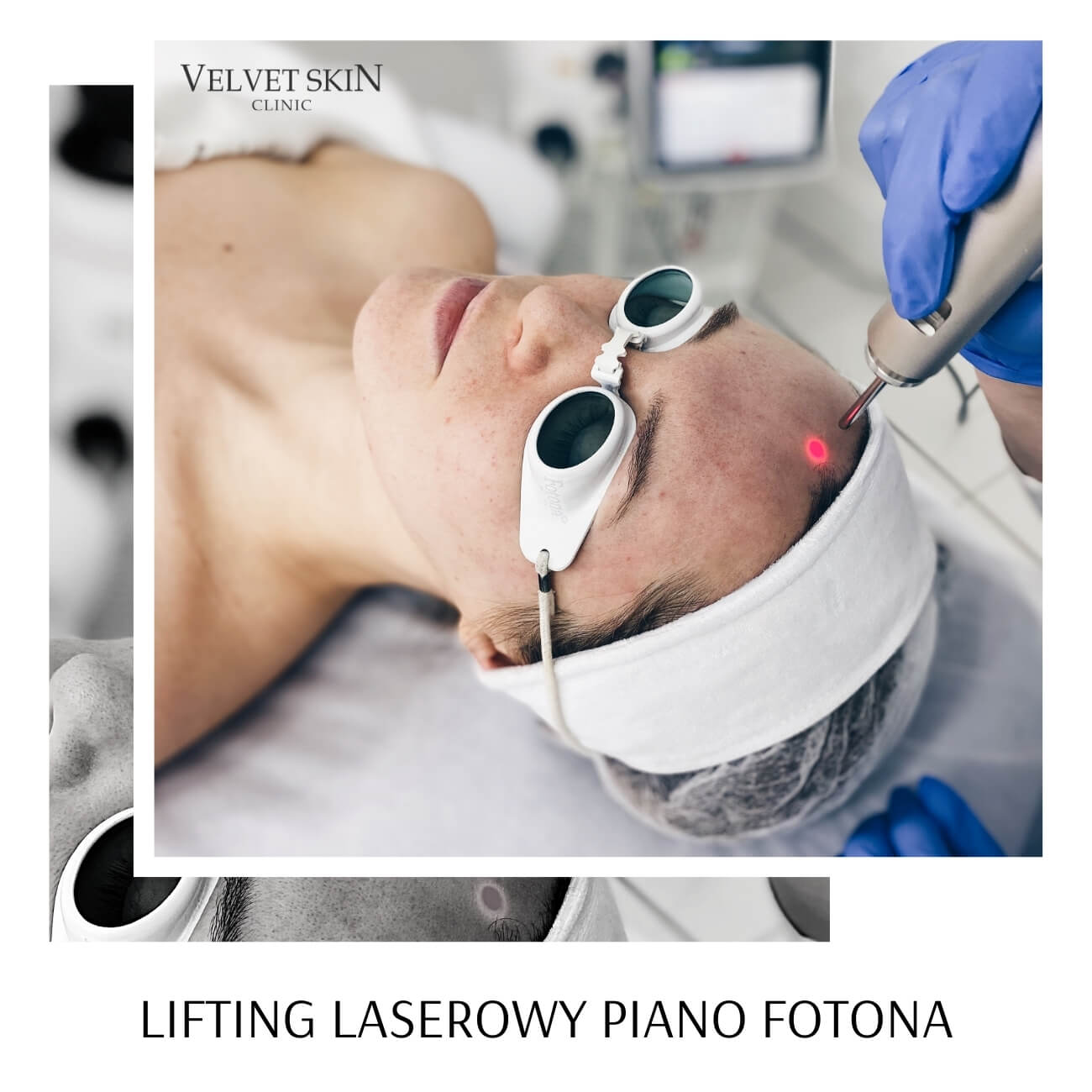
An ultra-long-pulse Nd:YAG laser mode, available only on the Fotona system. Even, high-volume heating of the dermis (40–45°C) contracts collagen fibres and stimulates their renewal — a strong lifting and firming effect with no damage to the epidermis and no downtime.
Laser lifting in PIANO mode is a therapy used to rejuvenate, firm and tighten the skin and to remodel the contour of the face and body. PIANO is an ultra-long-pulse Nd:YAG™ mode available only on the Fotona laser system. It delivers safe, fast heating of the tissue through concentrated, focused delivery of energy beneath the skin. Controlled heating contracts existing collagen fibres and stimulates the production of new collagen and elastin, giving a lifting and tightening effect. It is a non-ablative therapy mode — it does not vaporise the epidermis — recommended for patients who can't set aside time for downtime.
The Nd:YAG wavelength — 1064 nm — is a clinically confirmed, effective pulse wavelength used to contract collagen fibres and initiate the formation of new collagen molecules. The super-long PIANO mode extends Nd:YAG pulses beyond the parameters available on other lasers, and suits cases where even, high-volume heating of the dermis is needed to achieve tightening, firming and lifting without damaging the epidermis. The PIANO system is also used to treat fresh scars (e.g. post-surgical). The mode's main applications are laser skin remodelling and firming, treatment of skin laxity, scar treatment and deep thermolifting.
PIANO thermolifting is part of our Fotona laser lifting portfolio — alongside Fotona 4D, SMOOTH lifting, endolifting and SmoothEye. In total, we have performed 25,931 laser treatments.
Source: Versum and Booksy reports, as at 30 June 2026.
A wavelength clinically confirmed to contract collagen and initiate the synthesis of new fibres.
An extended pulse available only on Fotona — even, high-volume heating of the dermis without damaging the epidermis.
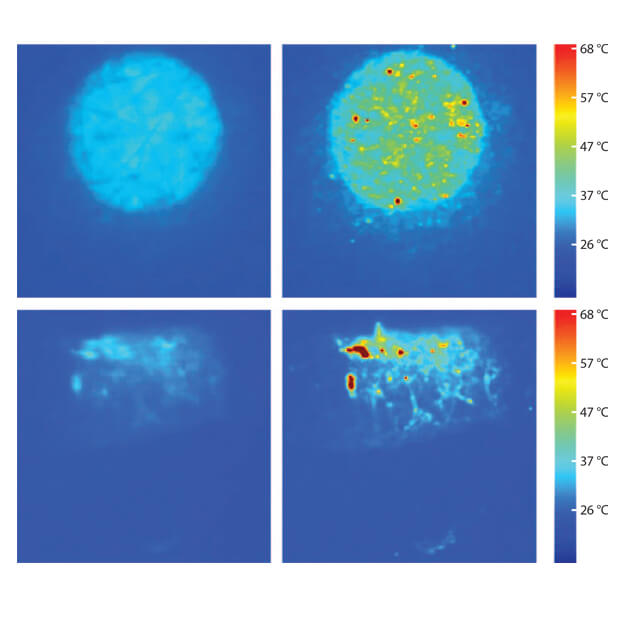
Reaching this temperature at the skin's surface warms the deeper fibres, contracting them and triggering neocollagenesis.
PIANO is Nd:YAG laser thermolifting. It differs from the SMOOTH mode (Er:YAG 2940 nm) — it works deeper and across a larger volume of tissue. We also offer generic 'facial thermolifting' using infrared technology — see NIR thermolifting.
It works a little differently in this case — below we describe exactly what it does.
Not sure which indication matches your situation? See all indications or ask us during a consultation.
The long-pulse 1064 nm Nd:YAG laser is one of the best-studied non-ablative skin-firming methods. The studies below relate to Nd:YAG technology — the mechanism shared by PIANO mode. Source: PubMed.
Four weeks after a course of long-pulse Nd:YAG treatments, the average wrinkle score fell by 45.1%, skin elasticity improved significantly, and histology confirmed an increase in collagen and elastic fibres.
PubMed →A study of non-ablative, long-pulse 1064 nm Nd:YAG assessed wrinkle reduction at 2, 4 and 6 months, documenting progressive improvement over time.
PubMed →Non-ablative 1064 nm Nd:YAG remodelling induces the formation of new collagen in the dermis without damaging the epidermis.
PubMed →The cited studies relate to 1064 nm Nd:YAG laser technology in general, not to a specific device brand. The number of sessions is set individually by a specialist; results may vary.
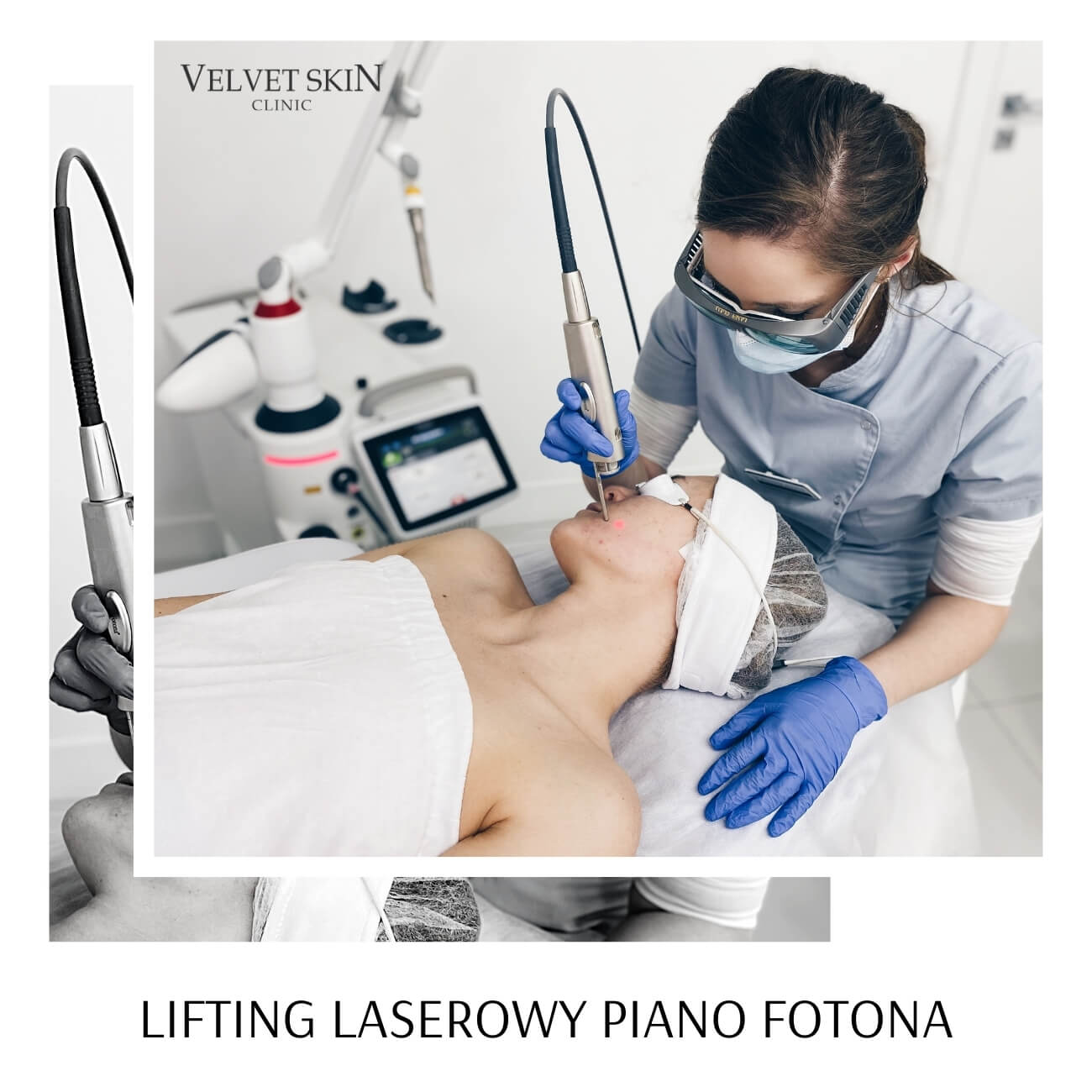
The treatment itself involves exposing the chosen area to Nd:YAG pulses to warm the skin evenly and deeply, following a specific protocol. The key is reaching a temperature of 40–45°C at the skin's surface, which warms the collagen fibres in the deeper layers and stimulates neocollagenesis. The laser runs for around 20 minutes and is comfortable for most patients — you'll feel a pleasant warmth. Afterwards, redness may appear, lasting up to an hour at most; there is no peeling and no downtime. The treatment can be carried out all year round.
The specialist rules out contraindications and plans the treatment areas.
Nd:YAG exposure to reach 40–45°C at the skin's surface.
Deep collagen fibres contract and are stimulated to rebuild.
Redness for up to an hour; no peeling and no downtime.
The treatment involves no downtime. Redness from the thermal heating lasts up to an hour at most. Even so, it's worth taking good care of your skin over the following days.
For at least 4 weeks, keep the treated area out of the sun and use a high-factor sunscreen.
For 5 days, skip the sauna and intense exercise that dilates blood vessels.
Use gentle cleansers and soothing creams; avoid exfoliants and alcohol-based toners.
Good hydration supports the lifting effect between sessions.
Wrinkles soften gradually for a year after the first session — stick with the full course.
This is general information for educational purposes. Detailed advice is given by your specialist; results and healing vary from person to person.
Real photos from our Velvet Skin Clinic locations in Warsaw (Świętokrzyska — City Centre, Niepodległości — Mokotów).


The price depends on the area treated. A single session already gives a firming effect, but a course of 3–5 (up to 6) sessions every 4–6 weeks is recommended for a full, lasting result. We plan the course at your consultation.
Non-ablative Er:YAG lifting for thin, lax skin with no pronounced wrinkles.
ViewGeneric facial thermolifting using infrared technology — an alternative to laser.
ViewA comprehensive, four-dimensional facial lift combining Fotona's modes.
View"I'd definitely recommend the Indiba treatment. It was carried out very carefully and in a really lovely atmosphere. A full hour of relaxation." (translated from Polish)
Joanna Lepkowska · 2025review from Booksy"Great salon. Wiktoria and Iwona are excellent professionals, and lovely people too! I highly recommend them!" (translated from Polish)
Agata · 2025review from Booksy"I've just finished a course of radiofrequency treatments and I'm really pleased. My facial skin looks healthier and firmer, and it all took place in a very friendly atmosphere. You can tell the staff here are experienced." (translated from Polish)
Zofia Sobczak · 2025review from GoogleEvery case is assessed individually by a specialist. Alongside temporary contraindications (recent tanning, retinoids, antibiotics, cold sores), the following absolute contraindications apply:
PIANO is an ultra-long-pulse Nd:YAG (1064 nm) laser mode available only on the Fotona system. It heats the dermis evenly and in high volume to 40–45°C, contracting collagen fibres and stimulating their renewal. The result is a lifting and firming effect with no damage to the epidermis.
PIANO is laser thermolifting (Nd:YAG 1064 nm), working precisely and deeply. NIR thermolifting uses infrared technology (a different device). Both methods firm the skin with no downtime — the specialist chooses the right technology at your consultation, depending on your needs and the area treated.
SMOOTH is an Er:YAG laser (2940 nm) that works from the epidermis down to the dermis using a triple pulse. PIANO is Nd:YAG (1064 nm), for high-volume, deep heating of a larger tissue volume. PIANO works well for medium and deep wrinkles and for fresh scars.
The treatment is comfortable for most patients — you'll feel a pleasant warmth. Afterwards, redness may appear for up to an hour at most. There's no peeling and no downtime, so you can get straight back to your daily activities.
A single session already gives a firming effect, but a course of 3–5 (up to 6) sessions every 4–6 weeks is recommended for a full, lasting result. Wrinkles soften gradually for up to 12 months after the first session, as collagen rebuilds.
Prices start from 500 zł and depend on the area treated. We confirm the exact price at your consultation. You'll find the full price list on our pricing page, and you can book a consultation online or by phone.
Treatments at Velvet Skin Clinic are performed by certified cosmetologists with many years of experience in laser therapy, hi-tech devices and skincare treatments. After your consultation, we match the method and the specialist to your skin and your goals.


00-116 Warszawa · opposite the Palace of Culture and Science
tel. 500 53 30 30
The publications behind this treatment — with PMID identifiers and an evidence-strength rating.