Mokotów Clinic:
al. Niepodległości 92/98
City Centre Clinic:
ul. Świętokrzyska 30
01 — What we help with · Face and eyes

Pigmentation and uneven skin colour

Sun spots, the mark of sun “worn in” over the years, pigmentation after acne or pregnancy — we lighten them in layers and safely, matching the method to the type of mark. At your consultation we will establish where they came from — and build a plan that evens out the complexion while keeping the skin calm.

Diagnosis of the type of markthis determines the method
Laser · IPL · peelslayered therapy
2 clinicsCity Centre · Mokotów
Consultationwith a skin analysis
02 — What it is

Skin pigmentation — why the complexion loses its evenness

Pigmentation is a local accumulation of melanin — the pigment that shields the skin from UV radiation. When melanocytes are over-stimulated (by the sun, by inflammation, by hormones), the pigment is laid down unevenly and spots appear along with a “dirty”, patchy complexion. It is one of the most common reasons why skin looks tired and older than it really is.

The key to effective therapy is identifying the type of pigmentation. We work one way with superficial sun spots, another with post-inflammatory pigmentation after acne, and different again with hormonal melasma, which tolerates aggressive treatments poorly. That is why at Velvet Skin Clinic we start with a skin analysis and only then choose a laser, light or a peel.

See the details

Why “one laser for everything” is a myth

Effective brightening is usually layered therapy: a laser or IPL breaks up the accumulated pigment, peels speed up its removal and even out the complexion, while home skincare and sun protection consolidate the result. The most common mistake is a strong treatment on unrecognised melasma — instead of lightening it, it can irritate it. That is why we manage established, hormonal pigmentation separately (see the concern melasma and chloasma).

03 — Velvet Skin Clinic in numbers

Experience in working with the complexion

3 766pigmentation treatments performed
8 173clients have trusted Velvet Skin Clinic
75% of clients return for further treatments
2clinics in central Warsaw

We have a full set of tools for working with pigmentation — Fotona lasers, Dye-VL IPL technology, the Cosmelan protocol and medical peels. That lets us match the method to the type of mark rather than the other way round.

Source: Versum and Booksy reports, as at 30.06.2026 (total pigmentation treatments performed; client numbers and return rates — data for the whole clinic).

04 — Causes

Where pigmentation comes from

The sun (photoageing)

The most common cause. UV radiation stimulates the melanocytes — lentigines appear along with a general darkening of the complexion.

Inflammation (after acne)

Post-inflammatory pigmentation (PIH) is left behind by pustules, scratches or treatments. The brown marks persist for weeks or months.

Hormones and medication

Pregnancy, contraception and some medicines favour melasma — a difficult pigmentation that calls for a separate, gentle protocol.

05 — Recognition

Recognise the type of pigmentation

Sun spots (lentigo)

Clearly demarcated brown spots on the face, hands and décolletage. They respond very well to laser and IPL.

Post-inflammatory pigmentation (PIH)

Marks left by acne and inflammation. Peels, a gentle laser and consistent sun protection help.

Melasma / chloasma

Symmetrical, “cloudy” hormonal pigmentation. It calls for caution — we manage it with a separate Cosmelan protocol.

We assess the type of mark at your consultation (sometimes under a Wood’s lamp). That determines whether we reach for a laser, light or a gentler path. Do you have melasma? See the dedicated concern →

06 — Consultation

Unsure which type of pigmentation you have? Book a consultation — we will identify the marks and choose a safe method.

Book a consultation
07 — How we help

Recommended solutions for pigmentation

We even out the complexion in layers — from breaking up the pigment through to smoothing and brightening the epidermis. Below are the methods we combine into a plan; each has its own dedicated page.

Laser

Laser pigmentation removal

The Fotona laser precisely breaks up the accumulated pigment of sun spots and lentigines. A strong, targeted effect on well-defined marks.

IPL light

Dye-VL Alma

IPL technology that lightens scattered pigmentation and improves the overall complexion at the same time — ideal for a “photorejuvenation effect”.

Depigmenting protocol

Cosmelan

A professional protocol for persistent, extensive pigmentation and melasma — it lightens and curbs recurrence. Suitable where the cause is hormonal.

Peels

Medical chemical peels

Acids that speed up the removal of pigment and even out the complexion — excellent support for laser therapy and a therapy for PIH after acne.

Laser peel

Fotona laser peel

Laser renewal of the epidermis — it brightens, smooths and restores radiance to a tired, “sun-worn” complexion.

Gentle laser

ClearLift

A non-ablative laser with no downtime — gentle evening of the complexion for sensitive skin and for those who would rather skip a recovery period.

08 — Which method is for me

A quick comparison

MethodWorks best onResultNote
Fotona laserwell-defined sun spots and lentiginestargeted breakdown of pigmentavoid on unrecognised melasma
Dye-VL (IPL)scattered pigmentation, overall complexionphotorejuvenation, brighteningexcellent for photoageing
Cosmelanmelasma, extensive and persistent marksdepigmentation + curbing recurrencesafe where hormones are involved
PeelsPIH after acne, patchy complexionevening out and support for laser therapya course of treatments
09 — Why it works

What the research says about brightening pigmentation

We select methods on the basis of clinical data. Below are publications on laser therapy, IPL light and peels in the treatment of pigmented lesions.

Laser / light
Sun spots

Treatment of lentigines

A review paper in JAAD discusses methods of treating sun spots (lentigines), pointing to lasers and light as effective options.

Ortonne et al., 2006 · PubMed →
Laser vs IPL
Pigmented lesions

Laser and IPL for freckles and spots

A comparison of the Q-switched laser and IPL in the treatment of freckles and lentigines — both methods lightened the lesions effectively.

Wang et al., 2006 · PubMed →
Peels
Complexion

Peels in the treatment of pigmentation

The study compared a TCA peel with a glycolic peel in evening out the complexion and reducing skin pigmentation.

Puri, Indian Dermatol Online J 2012 · PubMed →

Informational and educational material — it does not replace a consultation. The studies cited concern the methods as a group; the choice and the results are individual.

10 — How it works in practice

Pigmentation therapy step by step

We begin with a skin analysis and identification of the type of pigmentation — this decides the whole plan. We often combine methods within one course: first we break up and even out the pigment, then we consolidate the result with skincare and SPF protection.

Your consultation and diagnosis

Assessment of the type of marks and exclusion of contraindications (a fresh tan, for example).

Choice of method

Laser, IPL, Cosmelan or peels — on their own or in combination therapy.

A course of treatments

We remove the pigment in stages; the skin gradually lightens and evens out.

Consolidation and protection

Home skincare and strict SPF to lower the risk of the pigmentation returning.

11 — Care and prevention

How to consolidate the result and lower the risk of recurrence

Pigmentation returns above all because of the sun. Sun protection is therefore the foundation of every complexion therapy rather than an optional extra.

SPF all year round

A high factor every day — including in winter and on cloudy days. It is the single most important step in limiting recurrence.

Hands off the skin

Squeezing pustules and picking at the epidermis entrenches post-inflammatory pigmentation. Let your skin heal calmly.

Brightening skincare

Melanin-inhibiting ingredients (vitamin C and niacinamide, for example) support and prolong the results of treatments.

A maintenance plan

Seasonal top-up treatments — ideally in autumn and winter — keep the complexion even.

Patience and a full course

Safe brightening is a staged process. A lasting result is worth more than one aggressive treatment carrying a risk of irritation.

Informational and educational material. Detailed recommendations are given by your specialist; results are individual.

12 — Related concerns and therapies

See also

Concern

Melasma and chloasma

Hormonal, persistent pigmentation — a separate, gentle Cosmelan protocol.

See
Concern

Enlarged pores and photoageing

When the marks are joined by a dull, tired complexion and a loss of radiance.

See
Concern

Scars and skin texture

Post-acne pigmentation often goes hand in hand with uneven texture.

See
13 — Patient reviews

They trusted us

★★★★★

“I had a course of therapy for pigmentation and the results genuinely surprised me. A very welcoming place, everything went calmly, without pain and in pleasant surroundings.” (translated from Polish)

Agata O. · 2025review from Google
★★★★★

“Very professional and very warm.” (translated from Polish)

Aleksandra · 2026review from Booksy
★★★★★

“I recommend it! A wonderful place, my complexion is worlds better!” (translated from Polish)

Marta S. · 2025review from Google
14 — Safety

When to take extra care

Pigmentation therapy is always preceded by a medical history. The main contraindications and situations calling for caution:

a fresh tan and sunbed use
pregnancy and breastfeeding (some methods)
active infection or cold sores
oral retinoids (wait as advised)
a tendency to keloid scarring
an unidentified pigmented lesion — dermatological assessment first

Any suspicious or changing pigmented lesion is assessed by a dermatologist before treatment — safety matters more to us than the aesthetic result.

15 — Questions and answers

Frequently asked questions about pigmentation

Which treatment is best for pigmentation on the face?

There is no single best method — everything depends on the type of marks. Well-defined sun spots respond best to laser and IPL, post-acne pigmentation to peels, and hormonal melasma to the gentle Cosmelan protocol. That is why we start with a diagnosis rather than with a treatment.

Will pigmentation return after treatment?

They can return if their cause returns — above all the sun. With consistent SPF protection and skincare the result is lasting. Melasma, as a hormonal pigmentation, calls for maintenance treatments.

How many treatments does it take to remove pigmentation?

Individual sun spots sometimes disappear after 1–2 laser treatments, but evening out the whole complexion usually takes a course of several sessions. We agree the exact plan after assessing your skin.

Can pigmentation treatments be done in summer?

The safest season is autumn and winter, when the sun is weaker. Some gentle methods and peels can be performed in summer with strict SPF protection; stronger lasers are usually postponed.

How does ordinary pigmentation differ from melasma?

Ordinary pigmentation (sun-induced, post-inflammatory) is well demarcated and responds well to laser. Melasma is symmetrical, “cloudy”, hormonal and easily irritated — which is why we manage it separately, with a gentler protocol.

How much does it cost?

The price depends on the method, the size of the area and the number of treatments. We provide a quote at your consultation, and full rates are available in the price list. The consultation includes a skin analysis.

16 — Who performs the treatments

Treatments are performed by our cosmetologists

Treatments at Velvet Skin Clinic are performed by certified cosmetologists with many years of experience in laser therapy, hi-tech devices and skin care treatments. After a consultation we match the method and the specialist to your skin and your goal.

Małgorzata Wołyńska — MSc cosmetologist, Velvet Skin Clinic
Małgorzata WołyńskaMSc cosmetologistLaser therapy, laser hair removal, body contouring, anti-ageing
Edyta Osowska — MSc cosmetologist, Velvet Skin Clinic
Edyta OsowskaMSc cosmetologistInjectable treatments, anti-ageing therapies
Wiktoria Gregorczyk — certified cosmetologist, Velvet Skin Clinic
Wiktoria Gregorczykcertified cosmetologistLaser therapy, body contouring, laser hair removal
Julia Kononowicz — certified cosmetologist, Velvet Skin Clinic
Julia Kononowiczcertified cosmetologistLaser therapy, injectable treatments — over 10 years of experience
Kamila Rybak — MSc cosmetologist, Velvet Skin Clinic
Kamila RybakMSc cosmetologistHi-tech technologies, body contouring
Paulina Maruszewska — MSc cosmetologist, Velvet Skin Clinic
Paulina MaruszewskaMSc cosmetologistHi-tech procedures for face and body, body contouring
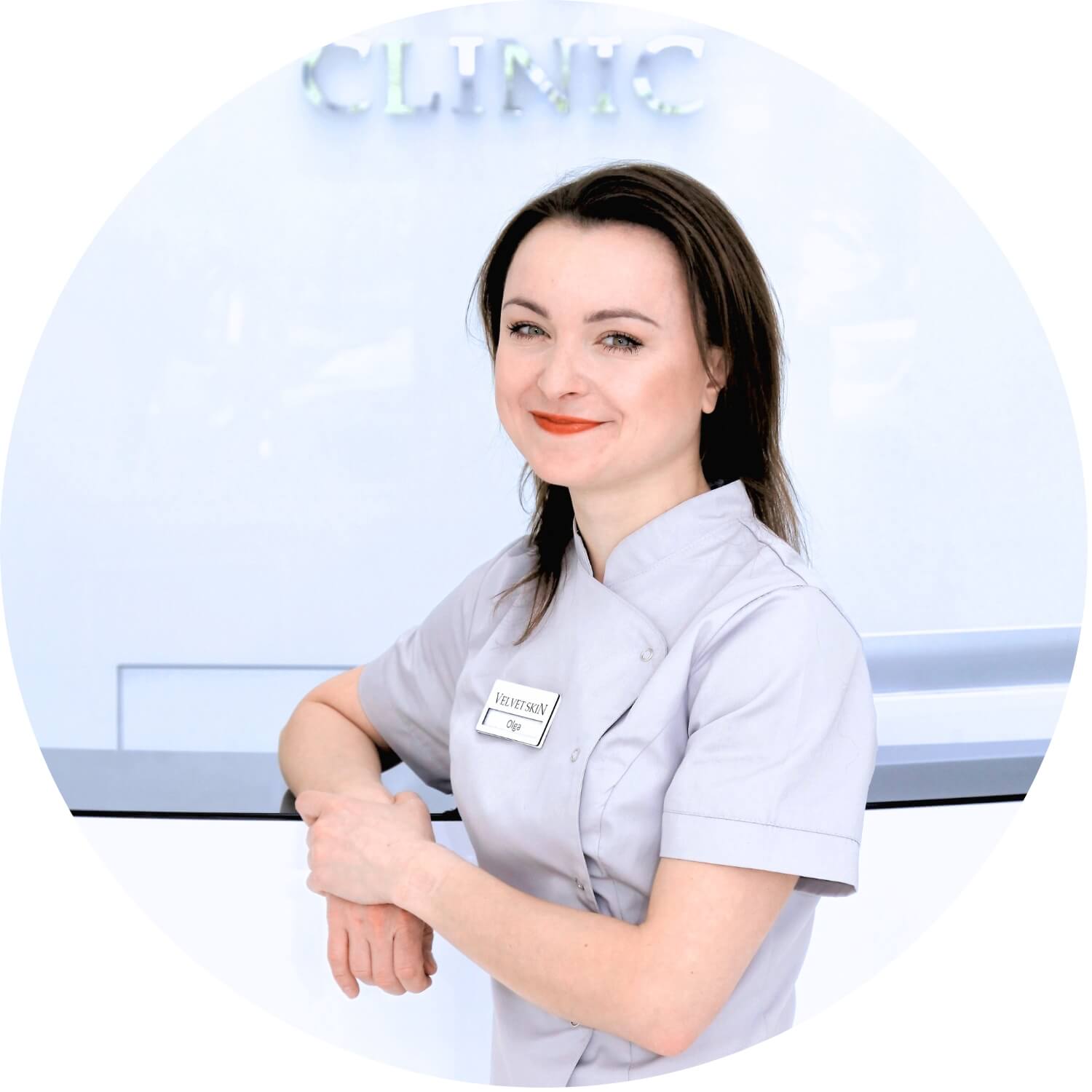
Olga Kucińska — MSc cosmetologist, Velvet Skin Clinic
Olga KucińskaMSc cosmetologistLasers, HIFU, needle mesotherapy, trichology — with the clinic since 2011
Joanna Kondratczyk — MSc cosmetologist, trichologist, Velvet Skin Clinic
Joanna KondratczykMSc cosmetologist, trichologistLaser hair removal, laser therapy, trichology

Meet the entire Velvet Skin Clinic team →

17 — Consultation

Book a consultation

City Centre Clinic

ul. Świętokrzyska 30

00-116 Warszawa · opposite the Palace of Culture and Science
tel. 500 53 30 30

Mokotów Clinic

al. Niepodległości 92/98

02-585 Warszawa · the heart of Mokotów
tel. 500 53 30 55

VELVET SKIN CLINIC · aesthetic medicine and laser therapy · velvetskin.pl
recepcja@velvetskin.pl
Scientific evidence

See what the research says

The publications on which we base this offering — with PMID identifiers and an assessment of the strength of evidence.

Velvet Skin Clinic logo
VELVET SKIN CLINIC - ŚRÓDMIEŚCIE
ul. Świętokrzyska 30
00-116 Warszawa
Tel. + 48 500 53 30 30
VELVET SKIN CLINIC - MOKOTÓW
al. Niepodległości 92/98
02-585 Warszawa
Tel. +48 500 53 30 55

Email: recepcja@velvetskin.pl
Copyright 2024 - Velvet Skin Clinic 
envelopephone-handsetmap-marker