Mokotów Clinic:
al. Niepodległości 92/98
City Centre Clinic:
ul. Świętokrzyska 30
01 — Laser therapy · Skin lesions

Laser Removal of Skin Tags and Warts with Fotona™ — even where you can't see them

Skin tags on the neck, seborrhoeic keratoses at the temple, lesions hidden under the hair on the scalp. The Er:YAG erbium laser vaporises the lesion layer by layer, releasing minimal heat into the surrounding tissue. A doctor evaluates every lesion first.

Doctor's assessmentbefore every treatment
Er:YAG 2940 nmablation with minimal heat
Usually one visitthe treatment takes a dozen or so minutes
771 treatmentssince 2019
02 — About the treatment

Laser Skin Lesion Removal — how it works

Skin tags and seborrhoeic keratoses are benign epidermal lesions. They don't hurt and pose no health risk, but they can be a nuisance — rubbing against a collar, catching on a necklace, visible on the neck and décolletage. Some sit in places you never see yourself: behind the ear, along the hairline, on the scalp.

The Er:YAG erbium laser works at a wavelength of 2940 nm — a length that water in the tissue absorbs almost entirely. The energy therefore stays exactly where it's aimed: it vaporises the lesion layer by layer instead of spreading deeper as heat. That's why the treatment can be performed precisely even on the thin skin of the eyelid and in hair-bearing areas, where protecting the hair follicles matters.

See the details

Why wavelength matters

Every wavelength is absorbed differently by tissue. Er:YAG hits the peak absorption of water, so it acts like a highly precise light scalpel — removing successive micro-layers while releasing minimal heat into the surroundings. In a paper describing more than a hundred procedures around the eye socket, the authors called this outright “athermal ablation”: removing thin layers of skin without scarring and with minimal lateral thermal damage.

This has practical consequences. Methods that work with heat or cold — electrocoagulation, cryotherapy, plasma — are harder to control for depth. When a lesion sits right next to a hair follicle or on the eyelid, that difference stops being theoretical.

One device, two wavelengths

The platform we work with combines Er:YAG 2940 nm with Nd:YAG 1064 nm and lets us smoothly adjust the pulse width — from purely ablative work to a purely thermal effect. This means we can tailor the approach to the specific lesion, its thickness and the patient's skin phototype, instead of using one setting for everything.

Erbium Er:YAG laser treatment behind the ear — visible red aiming beam. Velvet Skin Clinic Warsaw
03 — Skin lesion removal in numbersOur experience at Velvet Skin Clinic
771skin lesion removal treatments performed (2019–2026)
433patients
648of them performed with the Fotona laser
2clinics in central Warsaw

The laser accounts for 84% of the skin lesion removal treatments we perform. In total, we have carried out 9,402 treatments on Fotona laser platforms.

Source: Versum and Booksy reports, database as of 10 Aug 2026. Matched by procedure name.

04 — Technology · erbium laser

What sets the erbium laser apart from freezing and burning

01

Vaporisation, not burning

The 2940 nm wavelength is absorbed by the water in the tissue almost entirely. The lesion vaporises layer by layer, while the surrounding skin receives minimal heat.

02

Adjustable pulse width

The same laser can work either purely ablatively or thermally. We adjust the pulse width to the thickness of the lesion and the patient's skin phototype — this is what determines both effectiveness and risk.

03

Energy control in every pulse

A closed-loop energy control system ensures every pulse delivers the set value. Without it, power drops during the treatment, and successive passes are no longer identical.

In practice, this means a short, precise treatment: a single lesion usually takes a dozen or so seconds of laser work. We numb the skin with a topical cream, and after the treatment a small scab forms over the lesion site, which comes off on its own.

05 — Indications

Which lesions we remove with the laser

skin tags (neck, décolletage, underarms, eyelids)seborrhoeic keratoses flat wartslesions on the scalp lesions along the hairline and behind the eareyelid xanthelasma sebaceous gland hyperplasiasmall skin tags under 1 mm — multiple at once

Most often we see patients with skin tags on the neck and décolletage — single or multiple. The second large group is seborrhoeic keratoses, which appear with age and are sometimes mistaken for other lesions. A separate, often overlooked category is lesions on the scalp: the patient feels them with a comb or under her fingers but has never actually seen them.

06 — How we run the treatmentAssessment first, removal second

We never remove a lesion without a prior medical assessment

This isn't a formality or a line in the terms and conditions. A lesion that looks benign isn't always benign — and the laser vaporises tissue, so after the treatment there's nothing left to examine under a microscope. That's why our sequence is always the same.

Medical assessment

The doctor examines the lesion, magnified if needed, and determines whether its nature raises any doubts.

Treatment suitability or referral

If anything raises doubt, we don't remove it with the laser — we refer the patient to a dermatologist for diagnostics and, if needed, surgical excision with histopathological examination.

Treatment

Once qualified, the treatment is performed by a cosmetologist experienced in laser therapy, following the agreed plan and parameters.

Healing check-up

We schedule a follow-up visit to assess healing and determine whether a touch-up is needed.

This is a cosmetic procedure, not an oncological diagnostic test. It doesn't replace a mole check or a dermatology consultation — but it can help catch the moment when you need one.

07 — The area you never see

Lesions on the scalp — why they deserve special attention

You see your face in the mirror every day. You see your shoulders and décolletage in summer. You never see your scalp — it's the one place on your body where that's true without exaggeration.

This has consequences documented in the literature. In a prospective study of 3,570 invasive melanomas, lesions on the back of the scalp were associated with significantly worse prognosis than lesions on the back — after adjusting for thickness, ulceration and other tumour features. The authors called this area a “site of poor prognosis”. A second study, covering close to six thousand cases, pointed to a common denominator: locations that are hard to see during self-examination carry a worse prognosis.

This isn't about scaring you. It's about the fact that when you come in to have a skin tag removed from behind your ear, someone also takes a look at an area you can't inspect yourself.

Seborrhoeic keratosis on the scalp before laser treatment. Velvet Skin Clinic Warsaw

Not sure if your lesion qualifies for laser removal?

and non-binding. If we decide the treatment isn't right for you, we'll tell you directly.

09 — Scientific research

What the research says about laser skin lesion removal

The studies below concern ablative laser technology in general — not a specific device model. We also include less favourable results, because without them the picture would be incomplete.

Swipe to see all
Review · 1,492 patients

Up to 90% of lesions in one session

A PRISMA-based review covered 22 studies and 1,492 patients. Ablative lasers — CO2 and Er:YAG — removed up to 90% of lesions in a single session, with recurrence of 0–6% over up to 12 months of follow-up. Pigment-targeting methods required 1–3 sessions on average.

Dermatologic Surgery, 2026 · DOI
Comparison of 4 methods

Cryotherapy performed worst

Thirty patients, each with four similar facial lesions — each lesion randomly assigned to a different method. The Er:YAG laser, CO2 laser and electrocoagulation produced significantly better improvement than cryotherapy, for which patient satisfaction was significantly lower. Redness after Er:YAG, however, lasted longer.

Dermatologic Therapy, 2021 · DOI
25 years · over 3,000 patients

A quarter century of follow-up

A single centre summarised 25 years of erbium laser work in more than three thousand patients — flat warts, seborrhoeic keratosis, xanthelasma and scars. A complete response was achieved in 89.6% of those treated, with no significant adverse effects and a short healing time.

Medicines (Basel), 2021 · DOI
Split-face · 50 cases

Laser versus acid

Lesions on one side of the face were treated with the Er:YAG laser, on the other with 70% trichloroacetic acid. Complete clearance was achieved in 80% of the laser group versus 58% of the acid group, with fewer sessions and less frequent hyperpigmentation. The laser, however, required a longer healing time.

J Cutan Aesthet Surg, 2024 · DOI
Limitations of the method

Not every lesion, not every skin type

A study of 250 patients with darker phototypes produced clearly more modest results: complete clearance in 52% for flat warts and 37% for seborrhoeic keratosis, with scarring in 11.6% of those treated. Plantar warts performed worst of all. That's why phototype and location are part of our qualification process.

Indian J Dermatol, 2023 · DOI
When to come in

Time works against you

In a group of 102 patients treated with Er:YAG for viral warts, 60% achieved a complete response after one year. Effectiveness dropped noticeably with a higher number of lesions and a longer time between the lesion appearing and the treatment.

J Clin Med, 2025 · DOI

The cited studies concern Er:YAG and CO2 laser technology, not a specific device brand. The choice of method, wavelength and parameters is made individually by the specialist; results may vary. This material is for information and education purposes only.

10 — Treatment process

What the visit looks like step by step

Consultation and assessment

We examine every lesion that concerns you — including ones you don't even know about. We determine which ones qualify for laser removal.

Numbing

We numb the skin with a topical cream. It needs about 20–30 minutes to take effect.

Laser treatment

A single lesion usually takes a dozen or so seconds of work. A whole visit covering several lesions fits into a dozen or so minutes.

Follow-up

We schedule a follow-up visit after healing to assess the result and decide whether a touch-up is needed.

Visit duration
30–60 min
Number of sessions
usually 1
Anaesthesia
topical cream
Healing
7–14 days
11 — Aftercare

Recommendations after skin lesion removal

Don't pick at the scab

A small scab forms over the lesion site. It must come off on its own — picking it off early is the most common cause of a visible mark.

Protect from the sun

Healing skin is prone to pigmentation changes. SPF 50+ for at least four weeks, including in autumn and winter.

Moisturise and hydrate

Use a regenerating product as recommended — keeping the area moist speeds up healing and lowers the risk of a mark.

Skip the sauna and pool

No sauna, pool or intense exercise for one to two weeks. Sweat and chlorine irritate healing skin.

Redness is normal

After the erbium laser, redness can last longer than with other methods. This is expected healing, not a complication.

Come in for a check-up

A follow-up visit after healing lets us assess the result and catch early any lesion that needs a touch-up.

12 — Limits of the methodWhat we don't do

When we don't remove a lesion with the laser

This section is here on purpose. A clinic that claims one method solves everything reveals more about itself than about the method.

The lesion raises any doubt at all

Asymmetric, unevenly coloured, changing, bleeding, itching, or growing quickly. We refer you to a dermatologist — a lesion like that needs to be examined, not vaporised.

Thick, heavily keratinised lesions

For thick hyperkeratotic lesions, curettage can be more effective — it has a higher complete-removal rate and is the only method that allows the tissue to be sent for examination.

Plantar warts

This is the indication where the laser performs worst — a high recurrence rate. We don't promise results here; dermatological or podiatric treatment is the better route.

Pigmented moles

We don't remove moles with the laser. They require dermatological assessment and, if removal is needed, surgical excision with histopathological examination.

13 — How we work

See what the treatment looks like

Laser work on the scalp. The red aiming beam and the handpiece on the articulated arm are visible. Treating a single lesion takes a dozen or so seconds.
Treatment behind the ear — a spot the patient can't see herself. The skin is cooled during the procedure.
14 — The clinic and the treatment

See the clinic and the treatment in progress

Real photos from our clinics in Warsaw — Świętokrzyska and Niepodległości.

Seborrhoeic keratosis along the hairline before laser removal. Velvet Skin Clinic Warsaw
The lesion along the hairline before treatment.
The area on the scalp right after lesion removal — visible scab. Velvet Skin Clinic Warsaw
Right after the treatment — a visible scab at the lesion site.

We only publish photos with the patient's written consent, framed to show only the treatment area. Results vary by individual.

15 — Pricing and parameters

Skin lesion removal — pricing in Warsaw

The price depends on the number and size of the lesions. We confirm the exact price at the consultation, after the medical assessment.

Single lesion
300 zł
Two lesions
400 zł
Each additional
150 zł
Consultation
free

For multiple lesions and small skin tags under 1 mm, we quote a package price — usually better value than paying per lesion. The prices shown are list prices; the final quote is confirmed at the consultation.

17 — Patient reviews

They trusted us

★★★★★

"I recommend it — the visit went very smoothly, everything was explained in detail. I had a stitching scar on my knee removed, I’d rate the pain 0.5/10." (translated from Polish)

Patricia · 2026
review from Booksy
★★★★★

"My problem skin isn’t a problem anymore :) The staff did a great job with my acne scars and oily skin." (translated from Polish)

Dorota Bojko · 2025
review from Google
★★★★★

"I recommend it warmly! I felt well taken care of and learned a lot of important things during the consultation. I’ll rate the treatment itself later." (translated from Polish)

Sabina · 2024
review from Booksy
18 — Safety

Contraindications for the treatment

Every case is assessed individually by a specialist. Alongside temporary contraindications, absolute contraindications also apply.

Absolute

  • a lesion of unclear or clinically suspicious character
  • pigmented moles
  • pregnancy and breastfeeding
  • active skin disease at the treatment site, active herpes
  • tendency to keloid or hypertrophic scarring
  • clotting disorders, blood-thinning medication
  • uncontrolled diabetes, autoimmune diseases, cancer
  • vitiligo, epilepsy

Temporary

  • recent tanning — sun, sunbed, self-tanner: stop 2–4 weeks before
  • photosensitising medication (retinoids, oral tetracyclines)
  • photosensitising herbs (St John's wort, marigold) — 2–3 weeks before
  • oral or topical steroid treatment
  • chemical peels in the treatment area
  • alcohol within 24 h before the treatment

This is a cosmetic procedure. It does not constitute oncological diagnosis or treatment and does not replace a dermatological mole check. Medical qualification lowers the risk of missing a lesion that requires diagnostics, but it does not eliminate it. This material is for information and education purposes only.

19 — Questions and answers

Frequently asked questions — skin lesion removal

Does laser removal of skin tags hurt?

We perform the treatment after numbing the skin with a topical cream applied 20–30 minutes beforehand. Most patients describe the sensation as a brief sting or warmth. A single lesion takes a dozen or so seconds of laser work, so even without full numbing the discomfort is short-lived.

How much does skin tag removal cost in Warsaw?

At Velvet Skin Clinic, a single lesion costs 300 zł, two lesions 400 zł, and each additional one 150 zł. For multiple lesions and small skin tags, we quote a package price. The consultation includes an assessment of the lesions, and we confirm the final price after examining the skin.

Can a lesion grow back after removal?

A removed lesion usually doesn't come back in the same spot — in studies, recurrence after ablative lasers was 0–6% at one-year follow-up. New lesions can, however, appear in other places, because a tendency toward skin tags and seborrhoeic keratoses is an individual trait linked to age.

Will the treatment leave a scar?

The erbium laser works very superficially and releases minimal heat into the surrounding tissue, so the risk of a visible mark is low. The most common cause of lasting discolouration or a mark is picking off the scab too early and skipping sun protection in the first weeks of healing.

How long does the skin take to heal after lesion removal?

A small scab forms at the lesion site and usually comes off on its own within 7–14 days. Redness after the erbium laser can last longer than with other methods — this is expected healing, not a complication.

Can every lesion be removed with the laser?

No. We don't remove pigmented moles or lesions that raise any doubt with the laser — we refer such cases to a dermatologist, because they need to be examined, not vaporised. For thick, heavily keratinised lesions and for plantar warts, other methods can be more effective.

Who performs the skin lesion removal treatment?

A doctor assesses the lesion and qualifies the patient for the treatment. The treatment itself is performed by a qualified cosmetologist experienced in laser therapy, following set parameters. This sequence is fixed at our clinic, and we make no exceptions to it.

Can several lesions be removed during one visit?

Yes, and that's usually how a visit looks. We most often remove several lesions at once — a cluster of skin tags on the neck, for example. The number of lesions that can be removed in one session depends on their size and distribution; we determine this during the consultation.

20 — Who performs the treatment

The doctor assesses suitability, the cosmetologist performs the treatment

A doctor assesses the nature of the lesion. The treatment is carried out by our cosmetologists, who have years of experience in laser therapy.

Laser therapy team
Małgorzata Wołyńska — cosmetologist at Velvet Skin Clinic
Małgorzata WołyńskaCosmetologist, MScLaser therapy, laser hair removal, body contouring, anti-ageing
Olga Kucińska — cosmetologist at Velvet Skin Clinic
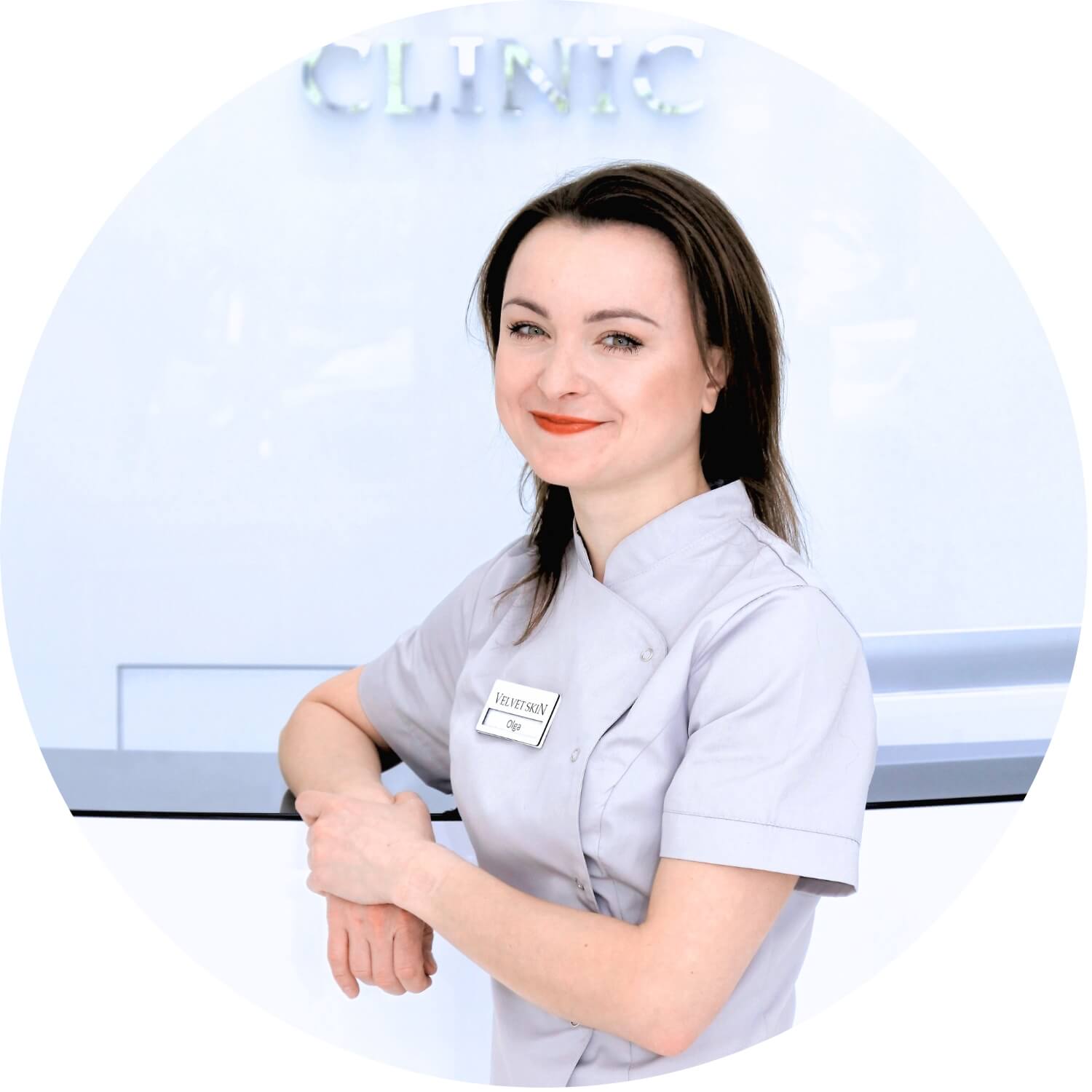
Olga KucińskaCosmetologist, MScLasers, HIFU, micro-needle mesotherapy, trichology — with the clinic since 2011
Joanna Kondratczyk — Cosmetologist, MSc, Trichologist, Velvet Skin Clinic
Joanna KondratczykCosmetologist, MSc, TrichologistLaser hair removal, laser therapy, trichology
Edyta Osowska — cosmetologist at Velvet Skin Clinic
Edyta OsowskaCosmetologist, MScInjectable treatments, anti-ageing therapies
21 — Booking

Book a consultation at one of our two clinics

City Centre Clinic

ul. Świętokrzyska 30

00-116 Warszawa · opposite the Palace of Culture and Science
tel. 500 53 30 30

Mokotów Clinic

al. Niepodległości 92/98

02-585 Warszawa · the heart of Mokotów
tel. 500 53 30 55

We perform skin lesion removal treatments primarily at our Świętokrzyska clinic.

PL
Velvet Skin Clinic logo
VELVET SKIN CLINIC - ŚRÓDMIEŚCIE
ul. Świętokrzyska 30
00-116 Warszawa
Tel. + 48 500 53 30 30
VELVET SKIN CLINIC - MOKOTÓW
al. Niepodległości 92/98
02-585 Warszawa
Tel. +48 500 53 30 55

Email: recepcja@velvetskin.pl
Copyright 2024 - Velvet Skin Clinic 
envelopephone-handsetmap-marker