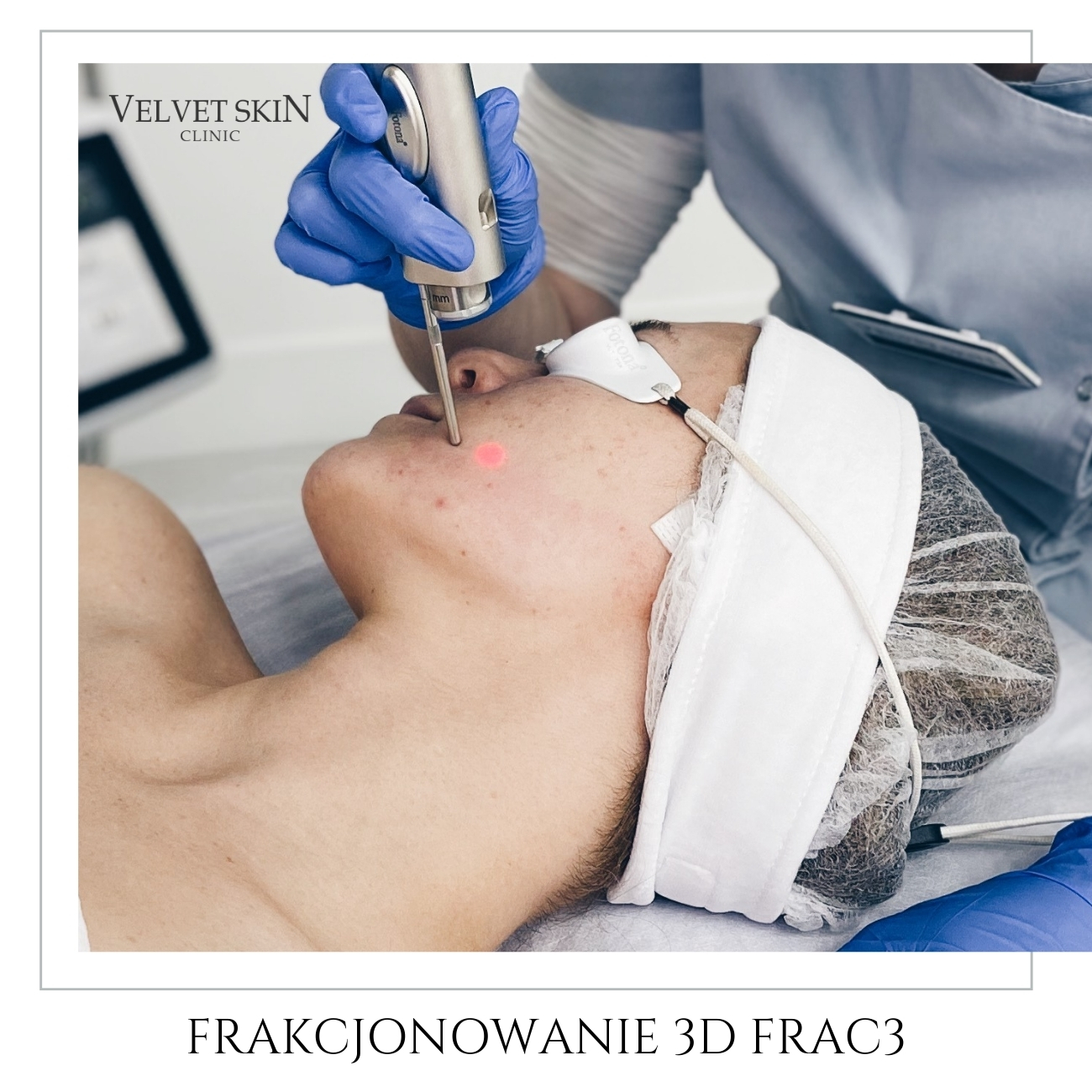
FRAC3 fractional treatment with the Nd:YAG beam (1064 nm) creates thousands of microthermal injuries at different depths of the skin, stimulating collagen renewal and a strong lifting effect. Unlike ablative fractional treatments, it does not vaporise the epidermis — the treatment requires no downtime and carries a low risk of complications.
FRAC3 fractional treatment with the Nd:YAG beam on the Fotona laser platform generates microthermal injuries at different depths within the skin to stimulate renewal and collagen regeneration, leading to a strong lifting effect. This method — unlike traditional ablative fractional treatments (Er:YAG, CO2) — does not cause ablation, meaning it does not shed the epidermis where the beam is applied, so the treatment requires no downtime and carries a low risk of complications.
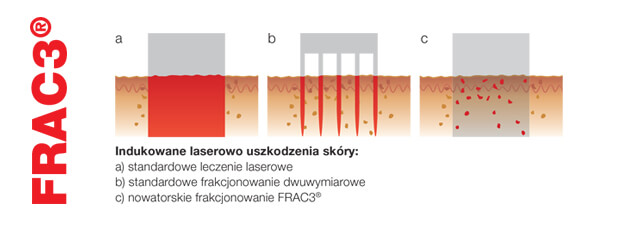
FRAC3 works by treating the skin with a neodymium-YAG laser beam at a wavelength of 1064 nm to create thousands of microthermal injuries at different depths. The laser light is absorbed by chromophores (including pigmentation, melanin clusters and small blood vessels), and the affected areas of skin trigger a regenerative response in collagen and elastin. Compared with classic CO2 fractional lasers, this is a more innovative and less invasive procedure: the energy passes through the epidermis without damaging it, and micro-injuries form throughout the full depth of the dermis, which is why the lifting effect can be stronger than with traditional fractional methods. Ablative (surface) fractional treatment, on the other hand, is delivered by Fotona's fractional resurfacing (Er:YAG).
FRAC3 is part of our Fotona laser rejuvenation portfolio — alongside fractional resurfacing, laser peel and Fotona 4D. In total, we have performed 9,671 treatments on Fotona platforms.
Source: Versum and Booksy reports, as of 30 June 2026.
The longer wavelength penetrates deep into the dermis — without vaporising the epidermis (non-ablative fractional treatment).
Thousands of microthermal injuries form at different depths of the skin — hence the name '3D fractional treatment'.
The regenerative response of collagen and elastin thickens, firms and tightens the skin — for a strong lifting effect.
The laser treatment takes about 15 minutes. For comfort, the skin is cooled with the Cryo6 cooling device. No ablation means no downtime — the treatment suits patients who cannot take time off their professional routine.
We use this treatment for this indication. It works a little differently for each one — below we explain exactly what it does in this case.
Not sure which indication matches your situation? See all indications or ask us during your consultation.
Non-ablative rejuvenation with the Nd:YAG 1064 nm laser is documented in the scientific literature. The studies below relate to Nd:YAG 1064 nm technology — the mechanism shared with FRAC3 fractional treatment.
This paper describes non-ablative skin resurfacing with a long-pulsed Nd:YAG 1064 nm laser — stimulating neocollagenesis without vaporising the epidermis and with minimal downtime.
PubMed →A study of the long-pulsed Nd:YAG 1064 nm laser demonstrated effectiveness in reducing wrinkles and improving skin tightness — the laser penetrates deep into the dermis.
PubMed →An assessment of non-ablative Nd:YAG 1064 nm for wrinkle treatment at the 2, 4 and 6-month marks confirmed progressive improvement alongside collagen remodelling.
PubMed →The cited studies relate to Nd:YAG 1064 nm laser technology in general, not to a specific device brand. The number of sessions is determined individually by the specialist; results may vary.
The procedure begins with a detailed review of your medical history and a check for contraindications. The treatment itself involves treating the chosen area of skin with the Nd:YAG handpiece of the Fotona laser to create a network of microthermal injuries deep within the skin. The laser treatment takes about 15 minutes. It is comfortable for most patients, and the skin is cooled with the Cryo6 cooling device for extra comfort. Mild redness may appear right after the treatment — it does not call for a long recovery period.
The specialist checks for contraindications and plans the treatment areas.
The skin is cooled for comfort during treatment.
A network of 3D microthermal injuries, around 15 minutes of laser time.
No ablation — you can return to your daily activities right away.
The treatment is non-ablative and requires no downtime, but it's worth protecting your skin for a few days afterwards. Mild redness is a normal, temporary reaction.
Avoid sun exposure on the treated area for at least 4 weeks; use a high UVA+UVB sunscreen.
For 5 days, skip the sauna, intense exercise and anything that dilates blood vessels.
Use gentle cleansers and soothing creams; avoid exfoliants, soap and alcohol-based toners.
The full lifting effect develops over the following weeks as collagen remodels.
For the full effect, a course of 3–6 sessions every 4–6 weeks is recommended.
Educational material only. Detailed recommendations are provided by the specialist; results and healing are individual.
Genuine photos from our Velvet Skin Clinic locations in Warsaw (Świętokrzyska — City Centre, Niepodległości — Mokotów).


The price depends on the area treated. For the full effect, a course of 3–6 sessions every 4–6 weeks is recommended. We agree on the plan and pricing during your consultation.
Er:YAG fractional rejuvenation — surface-level remodelling of the epidermis and dermis.
ViewEr:YAG ablative resurfacing of the epidermis — revitalising and brightening the skin's surface.
ViewA comprehensive, four-dimensional face lift combining Fotona's treatment modes.
View“FRAC3 photorejuvenation improved the texture and tone of my skin. I look younger and fresher.” (translated from Polish)
Daria Staniaszek · 2024Google review“Great experience — Ms. Monika is very professional and friendly, explains everything perfectly and advises which treatments are worth having :)” (translated from Polish)
Kasia · 2023Booksy review“I highly recommend a visit with Ms. Małgosia. A professional, friendly approach and full dedication. I'll be back!” (translated from Polish)
Ania · 2025Booksy reviewEach case is assessed individually by the specialist during the consultation. Alongside temporary contraindications (recent tanning, retinoids, antibiotics, cold sores), the following absolute contraindications apply:
FRAC3 is a non-ablative fractional treatment with the Nd:YAG laser (1064 nm). The laser creates thousands of microthermal injuries at different depths of the skin (3D action), stimulating collagen renewal and a lifting effect — without vaporising the epidermis and without downtime.
FRAC3 is non-ablative (Nd:YAG 1064 nm) — it works deep in the dermis without vaporising the epidermis. Fotona's fractional resurfacing (Er:YAG) and CO2 lasers are ablative and work closer to the surface. FRAC3 delivers a strong lifting effect with no downtime.
Only mild, temporary redness appears after the treatment, and it fades quickly. FRAC3 works without vaporising the epidermis, so healing is minimal — you can return to your daily activities right away.
For the full effect, a course of 3–6 sessions every 4–6 weeks is recommended. The lifting effect builds over the following weeks as collagen remodels. The specialist determines the exact number of sessions individually.
FRAC3 acts on the skin's chromophores and improves overall tone as part of the rejuvenation process. For treatment specifically targeting pigmentation or visible blood vessels, we use dedicated procedures — the specialist will advise on the details during your consultation.
The price starts from 300 zł and depends on the area treated. We confirm the exact price during your consultation. You'll find the full price list on our pricing page.
Treatments at Velvet Skin Clinic are performed by certified cosmetologists with years of experience in laser therapy, hi-tech devices and skincare treatments. After your consultation, we match the method and specialist to your skin and your goals.


00-116 Warszawa · opposite the Palace of Culture and Science
Phone: 500 53 30 30
The publications underpinning this treatment — with PMID identifiers and an evidence-strength rating.